
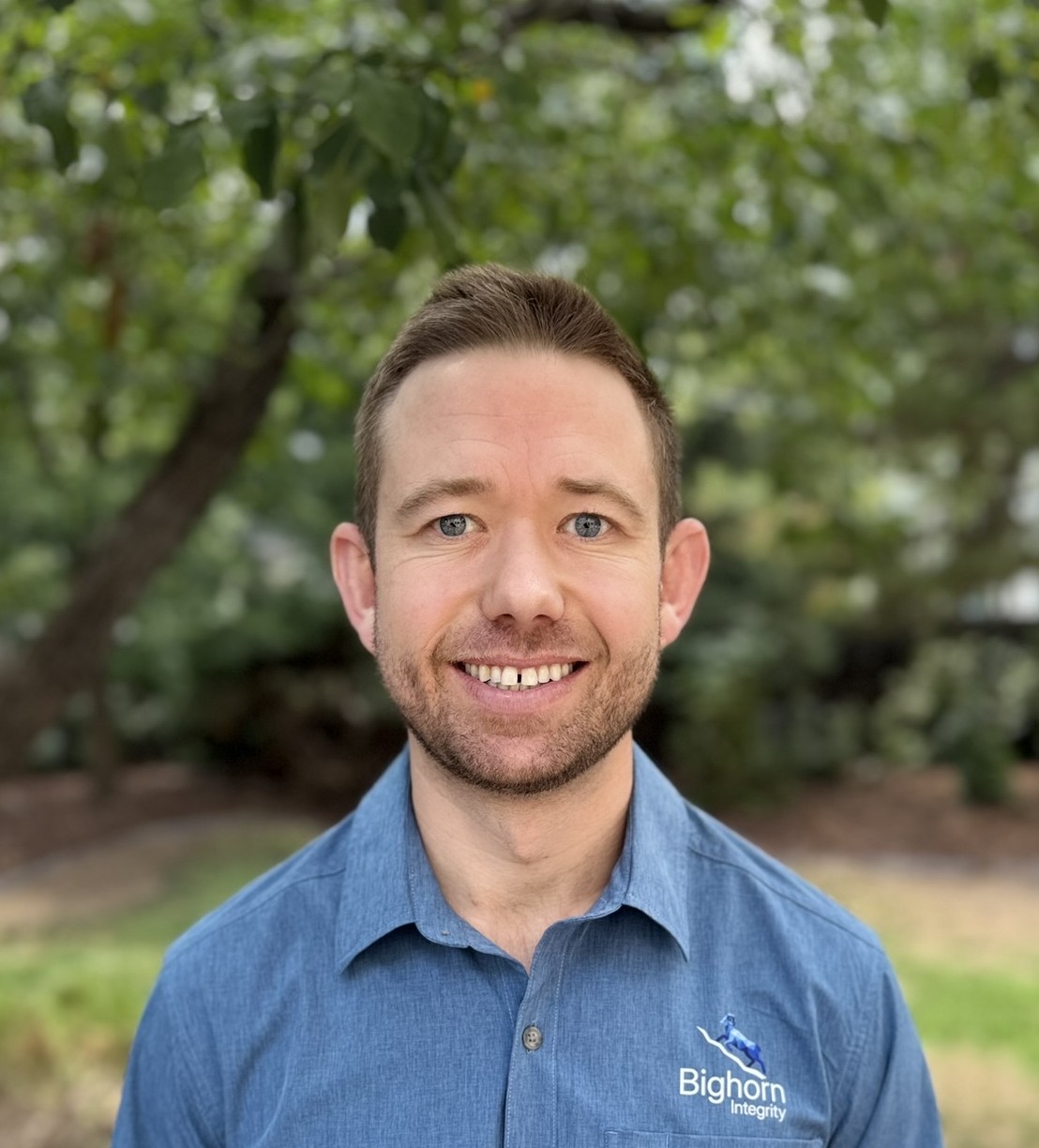
Jeff Goldstein, P.E.
Principal Engineer and Founder, Bighorn Integrity
Over fifteen years in mechanical integrity, on both sides of the fence: accountable for the program from inside the refinery, and solving problems and supporting MI programs from outside as a consulting engineer.
Three Vantage Points on the Same Problem
Jeff Goldstein is a Principal Engineer and global mechanical integrity Consulting Engineer specializing in the energy and refining industries. He is a licensed Metallurgical Professional Engineer in Colorado and Texas with over 15 years of experience in asset integrity, corrosion management, and inspection program optimization.
Fixed equipment integrity looks different depending on where you sit. Jeff has worked it from all three positions.
Chevron, 10 years
The owner's seat.
Jeff spent the first decade of his career inside the plant, working at three Chevron refineries in roles such as refinery corrosion engineer, inspection supervisor, and culminating as Integrity Manager at a Gulf Coast refinery. He led inspection and integrity engineering teams, implemented risk-based inspection programs, and rebuilt Inspection Data Management Systems to drive down high-consequence risk. He owned the inspection budget, planned the turnarounds, and defended the deferrals.
Quest Integrity, 2 years
Analysis Experience
Jeff then went deep into one of the most technical asset classes in the refinery, serving as a consulting engineer on fired heaters. The work included numerous API 579 fitness-for-service assessments on heater tubes across creep, elastic failure, and localized thinning problems. This is where general integrity judgment gets calibrated against rigorous, mechanism-specific analysis. Jeff also evaluated numerous fired heaters at refineries around the country to identify reliability threats and other cost saving opportunities.
Becht, 3 years
Industry Perspective
Leading Becht's global mechanical integrity group put Jeff across dozens of operators, facility types, and program maturity levels worldwide, from ground-up MI program development to assessments of programs that had been running for forty years. Breadth at that scale is what makes it possible to tell a client which of their problems is actually unusual and which one every plant has, with a solid understanding of the solutions that have (and haven't) been tried and tested already by competing facilities.
Bighorn Integrity, Founded February 2026
All three, on one engagement.
Bighorn exists to put all three perspectives on one engagement. Analysis with the rigor of a specialist practice, program design with the breadth of a global consultancy, and recommendations scoped by someone who has had to live with them. Programs are built around what a real integrity team can carry, what an auditor will accept, and what the program still looks like three years after the Consulting Engineer leaves. This includes all the integrity engineering support you need to help keep your existing program running smooth, from initial inspection planning all the way through FFS.
Engineering Experience
As a Consulting Engineer, Jeff has led major initiatives for clients worldwide, from mechanical integrity program assessments to building and implementing MI programs from the ground up. Recent work concentrates on efficiency and risk reduction.
CML Optimization and Circuitization
Reduction of low-value thickness monitoring locations while preserving and often improving coverage on high-consequence circuits. Corrosion circuit development and recircuitization so inspection data can actually be analyzed rather than merely stored. The objective is never a smaller CML count. It is a defensible scope that puts technician hours where damage is credible.
Inspection and Turnaround Planning
RBI implementation and revalidation, turnaround inspection scope development and optimization, and special emphasis programs including corrosion under insulation, low Silicon Carbon Steel (Sulfidation), deadlegs, and retroactive PMI.
Fitness-for-Service Assessment
API 579 FFS evaluations across the full assessment set: general and local metal loss, elastic failure and short-term overheating, and creep remaining life on fired heater tubes operating in the creep range. Jeff has run these assessments as a full-time practice at Quest Integrity, and has authored technical work on carburization damage assessment methodologies for fired heater tubes. On pressure equipment and process piping, recent assessments include LTA calculations, assessments for brittle fracture, and other damage types.
Pressure Equipment Calculations
ASME Section VIII Division 1 design and rerate calculations covering shell and head minimum thickness, UG-37 area replacement, UG-45 nozzle neck requirements, Appendix 1-7 large opening rules, and external pressure per UG-28. Cold eye review of third-party rerate packages and MAWP determinations.
Pipe Stress and Vibration
CAESAR II stress analyses for process piping and related process systems, including load case construction, support scheme adequacy, and equipment nozzle load compliance. Development of buried piping analysis methodology under ASME B31.4, covering ALA soil-structure interaction modeling, thermal load case definition, and restrained versus unrestrained pipe classification. Vibration screening and analysis for systems where fatigue rather than corrosion is the controlling threat.
Root Cause Failure Analysis
Jeff has led and facilitated high-profile root cause analysis efforts for operational equipment failures, combining metallurgical investigation, fractography, and damage mechanism identification per API 571 with the facilitation skills required to keep a cross-functional team on the evidence.
Industry Leadership
Jeff maintains an active and influential presence in the industry. He has served as chair of the AMPP Refining Industry Corrosion Symposia and the API Hydrogen Roundtable, and he contributes regularly to API standards committees, including acting as a section lead and author for the upcoming API Technical Report 596, "Corrosion Monitoring Locations Statistical Analysis." He is a frequent conference speaker and has authored technical papers on subjects including carburization damage assessment methodologies for fired heater tubes. He has also taught training classes, offered virtual Inspectioneering webinars, and authored an article for the Inspectioneering Journal published in the July/August 2026 edition.
Staying inside the standards development process is not a credential exercise. It means Bighorn's clients get guidance grounded in where the codes are now and where they are heading, rather than in how they were interpreted a decade ago.
Credentials
- Licensed Professional Engineer, Metallurgical Engineering: Colorado and Texas
- API 510 Pressure Vessel Inspector, active certification
- B.S. Materials Engineering, California Polytechnic State University, San Luis Obispo
- 15+ years in asset integrity, corrosion management, and inspection program optimization
- Past chair, AMPP Refining Industry Corrosion Symposia
- Past chair, API Hydrogen Roundtable
- Contributing member, API standards committees
- API TR 596, Corrosion Monitoring Locations Statistical Analysis — Section Lead and Author
- Based in Lafayette, Colorado, serving clients worldwide
Have a problem that needs a solution, not just a report?
Most of Bighorn's work starts with a conversation about something specific: multiple failures from a mechanism like CUI, a CML program nobody trusts, or a locally thin area that needs to be assessed.
Give us a call or text at (970) 800-2499, or drop us an email. We'd love to connect.
Jeff Goldstein, P.E.
[email protected]